
Updates + current situations
Nobody is Coming to Help After a Disaster — Nobody but Us
North Coast Journal | by Laurie Richmond and Erin Kelly March 26, 2026
“What each of us can do to make our community more resilient”
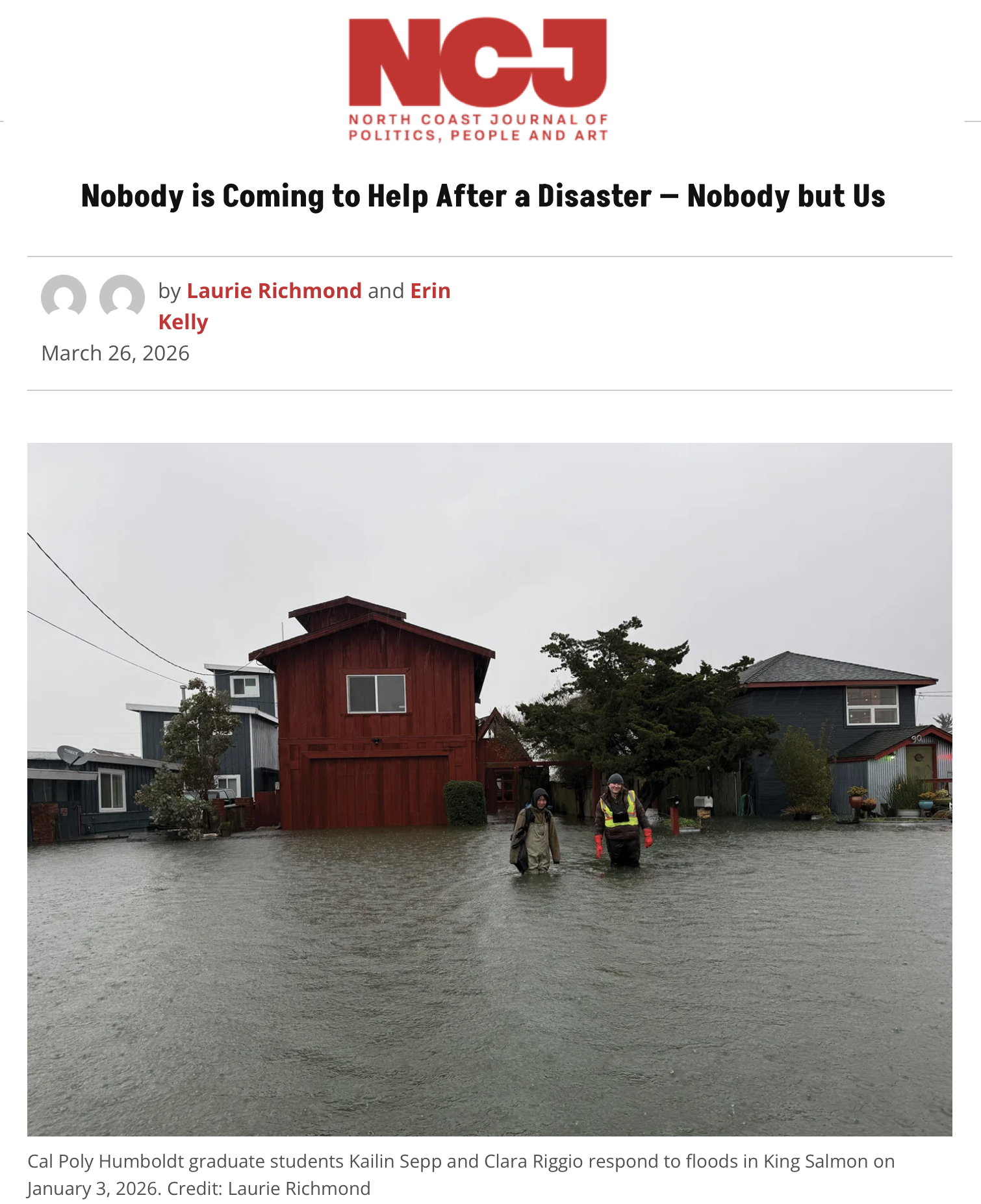
It’s been a difficult start to the year in our corner of far Northern California, with record tidal flooding that inundated more than 40 homes in King Salmon Jan. 4-6, the same weekend as the fire in downtown Arcata. Just over a year prior on Dec. 5, 2024, our community experienced a magnitude 7.0 earthquake and tsunami warning — a stark reminder of the seismic risks our region faces. To the east, huge wildfires return almost annually, with the August Complex and Slater fires in 2020 burning through communities in Trinity and Siskiyou counties, killing three people and destroying hundreds of homes.
While our geographic location has always placed us at risk of disasters, climate change will only make things worse, bringing sea-level rise and increased coastal flooding, wildfires of larger size and severity, and greater potential for extreme weather events.
We are two faculty members from Cal Poly Humboldt who research community aspects of natural resource issues. Because of recent events, we have been documenting how disaster response and recovery does and does not work in our region. We hope to share some of what we have learned here.
The general public may assume that after a disaster the government will provide relief and support. We might imagine that after a disaster teams of Federal Emergency Management Agency (FEMA) workers flock to a site to assist and Congress grants millions or billions of dollars to support recovery. The truth is that federal or state assistance following a disaster is rare in our region. Federal and state emergency declarations require that the disaster meet certain thresholds, often related to the financial costs of damage. Due to our rural location and comparatively lower property values, these thresholds, particularly at the federal level, are difficult to meet. If there is no emergency declaration, then the individual and public assistance programs offered by FEMA are not available to survivors.
For example, the 2022 Rio Dell earthquake that severely damaged 25 percent of the city’s housing stock and caused $35 million in damage to the county did not meet the threshold for a federal declaration. Because housing and communities are so remote and dispersed in many of the wildfire-impacted communities in our region, very few fires meet FEMA’s threshold for assistance. The 2017 Helena Fire in Trinity County burned 72 homes in the town of Junction City, but was not declared a disaster. Federal thresholds would have required more than 400 homes to burn.
Even if disasters do meet federal or state disaster thresholds, such as with the 2020 wildfires, the resources and payments are not nearly enough to make people whole, and payments can be delayed by complex bureaucratic processes. Many people who most need assistance lack internet connectivity and support services to access funding and to navigate the paperwork required to receive assistance. It is worth noting that federal support for disasters is likely only to decrease in the coming years. The current administration has already made cuts to FEMA staff and programs, and has floated plans to decrease federal commitment to disasters and even eliminate FEMA entirely.
Individual counties can issue a disaster proclamation following an event. While this can draw attention to the issue, it does not come with any funding. Each county in the region has an Office of Emergency Services (OES), which is responsible for coordinating disaster response locally, including issuing emergency alerts. Their focus is on immediate response to protect human lives (e.g. search and rescue, sheltering, evacuations, critical medical care, food and drinking water). These OES offices are generally under-resourced, which can limit their role in the aftermath of a disaster. None of our region’s counties has any permanent staff to support longer-term post-disaster recovery and rebuilding processes.
Support from the private sector can be significant, whether through insurance or GoFundMe solicitations. But we are seeing the strains of these systems under the increasing frequency of disasters, as many insurance companies have stopped insuring in California altogether because of fire risk. While GoFundMe accounts can provide relief to certain individuals, they tend to disproportionately help people who already have support networks. So crowdsourcing accounts are not a scalable model that can help everyone.
The truth is that most of the disaster response and recovery processes in our region have been, and will need to continue to be, led by us: community members and community organizations. Many counties have worked to develop Community or Volunteer Organizations Active in Disaster (COADs or VOADs) which bring together community organizations to mitigate and respond to disasters. COADs and VOADs are part of a nationwide network and their members have developed specialized expertise in disaster response and long-term recovery. The Humboldt COAD is particularly strong and experienced. It brings together community organizations throughout the county to mitigate and respond to disasters. They help lead long-term recovery including developing case management processes and supporting the physical and emotional/spiritual needs of survivors.
The Humboldt COAD network also facilitates connecting survivors with external groups that can be mobilized after disasters, from governmental agencies (e.g. FEMA, the Small Business Administration and Cal OES) to bigger external organizations (e.g. Habitat for Humanity, Team Rubicon and United Way). In places outside of Humboldt, other organizations have stepped up to help lead recovery, such as the Karuk Tribe and the Happy Camp Community Center, which formed the Slater Long Term Recovery Group after the Slater Fire.
Local organizations, including COADs and VOADs, are well-positioned to provide disaster assistance. They understand the context, have preexisting relationships of trust within the community and have the appropriate expertise. Given the dearth of federal, state and county government support, they often play the leading role in disaster recovery. However, they are chronically underfunded and underrecognized, given their critical role. Additionally, these networks are not as strong or available in rural and remote places in our region including parts of Del Norte, Trinity and Siskiyou counties.
So it is important for every North Coast resident to prepare to take on the responsibility of caring for themselves and their fellow community members, should something happen. Below is a list of actions all of us can take to make our communities more resilient and prepared for future disasters:
Take steps to prepare your family and your property for potential disasters. Have a conversation with your family and loved ones to create a disaster plan, put together a go-bag, and have a two-week supply of food and water in your house. Review and follow the earthquake and tsunami guidance in the Living on Shaky Ground magazine. Take steps to mitigate your property from future hazard risks, such as flood or fire-proofing steps like creating defensible space around your home. Sign-up for Humboldt, Trinity, Siskiyou and/or Del Norte OES Emergency Alerts, and develop a habit of closely following weather, fire and tide information so you can be aware of when potential hazards may come your way. Stay on top of your insurance coverage and get as much as you can. Insurance in our state is a total mess and it can be tempting to go without, but it is still the best financial protection from future disasters. When making decisions about insurance coverage, do not assume that federal assistance will arrive to help pay for damage after a disaster.
Get to know your neighbors. In a disaster, your neighbors might be your first responders (or you theirs). Strong relationships and a foundation of trust with your neighbors will improve your ability to navigate disasters. Sometimes neighbors get to know each other aftera disaster, as they grapple with immediate, basic needs in the aftermath of an event. But forming these connections before a disaster can help people identify who could need extra help or who has special skills or resources. Talking to neighbors, mapping your neighborhood and hosting neighborhood potlucks can all create a network of support. Even just having your neighbors’ phone numbers can be helpful. Research shows that strong social ties are a huge asset in disaster response and recovery.
Become involved in a civic or community group that can play a role in disaster recovery.Faith-based, mutual aid and other community organizations can play a big role in helping our community after a disaster. They bring together people who can be galvanized in the event of a disaster. Venues such as granges, Elks lodges and community centers or halls can become important gathering and staging areas following a disaster. Unfortunately, many civic organizations are seeing a generational decline and are in need of fresh participation and leadership. For example, the Humboldt Grange became an important site and resource following the King Salmon floods, but only has 25 members remaining.
Donate and/or volunteer to support community organizations involved in disaster response and recovery. Nonprofit organizations primarily run disaster response and recovery efforts, and we need to make sure that these organizations remain healthy to serve us in times of need. Research which groups in your area are active in disasters, perhaps through their participation in county COAD/VOADs. For example, Humboldt COAD has a list of partner organizations. Humboldt Area Foundation’s (HAF) disaster response and resilience fund provides gap funding to support disaster recovery throughout the broader North Coast region. HAF is able to quickly get funds to the organizations doing work on the ground. If you don’t have funds to give, many of these groups have opportunities for volunteers to assist with disaster recovery activities. The Humboldt Community Emergency Response Team Coalition (CERT) provides information and training for individuals who wish to learn more or be more involved in emergency response. Other counties host CERT trainings fairly regularly.
It can be empowering to take ownership and responsibility for disaster recovery. For such a rural area, we have a robust foundation of community organizations and an extraordinarily strong constellation of local tribal governments that hold generational cultural values of caring for community and have been leaders in disaster preparedness and response for our region. Blue Lake Rancheria built a microgrid to bring energy resilience to our community during disasters. The Yurok Tribe has an impressive OES that operates across three counties. Additionally, due to their sovereign status, tribes are able to directly request disaster declarations and support from federal entities, something the Karuk Tribe did during the Slater Fire.
Many of the steps above will benefit our community beyond disaster preparedness. Getting involved in local organizations and building relationships with your neighbors can be fun, as well as helping address our nation’s loneliness epidemic. So don’t delay! We challenge everyone to volunteer for that organization, to join that board, to donate those funds, or to plan that community gathering. We can all be inspired by the words Christine E. Nieves Rodriguez wrote about her community’s response and recovery process following Hurricane Maria in Puerto Rico:
“Community is our best chance . . . It turns out that communities are the most important force that allows humans to weather great storms, literally and metaphorically. The climate crisis will intensify, but our communities will continue to rise — because they are already standing.”
Laurie Richmond is faculty at Cal Poly Humboldt in the Department of Environmental Science and Management, and an extension specialist for California Sea Grant. You can learn more about her work at: laurierichmond.net.
Erin Kelly is department chair and professor at Cal Poly Humboldt in the Department of Forestry, Fire and Rangeland Management. Learn more at humboldt.edu/forestry-fire-rangeland-management/faculty-staff.
Graduate students Catriona Barr, Clara Riggi, and Kailin Sepp were instrumental in the research and engagement that helped inform this piece.
This article appears in On the Matter of Censure
After the Storm: King Salmon residents face long-term recovery after severe flooding
March 5th, 2026 | North Coast Journal | Read HERE
Written by: Griffin Mancuso
King Salmon residents face long-term recovery after severe flooding
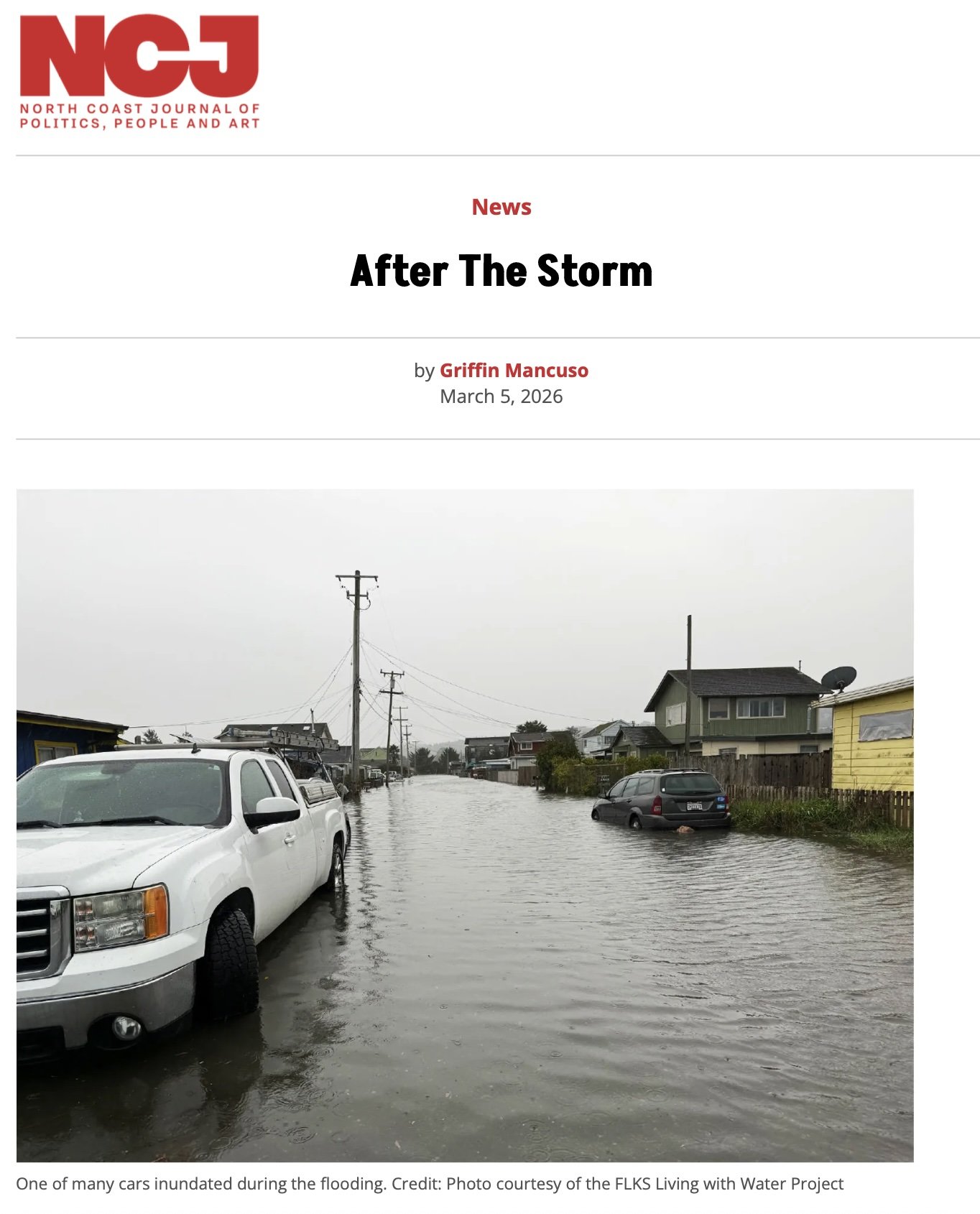
King Salmon’s streets have mostly returned to their former appearance, before the record-breaking flood in the early days of the new year, with residents gradually reentering their homes and ruined appliances no longer lining the street. While most of the physical evidence is gone, a collective anxiety still spikes among residents any time the tide rises.
“We’ve come out of what we call the muck and gut period, which is a really lovely technical term,” Humboldt Community Organizations Active in Disaster Executive Director Nick Bown-Crawford says. “And people have been airing out their homes with dehumidifiers and fans, and demo-ing floors, walls. So a lot of folks are getting estimates for bids and repairs on their properties, and stuff like that.”…continue reading
SBA Disaster Declaration: 2026 Early January Storm, Tidal Flooding, and King Tides and DLOC Activation
Please read the information bellow regarding the U.S. Small Business Administration (SBA) disaster declaration (Release Number CA-20039-01) following the 2026 Early January Storm, Tidal Flooding, and King Tides. The declaration, issued on February 5, 2026, authorizes federal disaster assistance for Humboldt, Del Norte, Mendocino, Siskiyou, and Trinity counties to mitigate physical and economic losses resulting from the atmospheric events of December 31, 2025, through January 5, 2026.
Review the Humboldt County 2/6/2026 press release and SBA Fact Sheet on the declaration:
SSBA Disaster: CA-20039 FACT SHEET
Humboldt County Press Release 2/6/26
Disaster Loan Outreach Center (DLOC) Operations
To facilitate the application process, in partnership with Humboldt COAD and the County of Humboldt, a DLOC will be established in Humboldt County to provide technical assistance and in-person consultations. Humboldt COAD will be present at the center to assist residents in navigating secondary aid resources and insurance concerns. Resources and supplies will also be distributed from the DLOC location while it is in operation.
Location: Humboldt Grange #501, 5845 Humboldt Hill Rd., Eureka, CA 95503.
Schedule: Opens Monday, Feb. 9 at 1 p.m. Regular hours are Monday–Friday, 9 a.m. – 6 p.m.
Note: The center will be closed on February 16 for President’s Day.
Appointments: While walk-ins are accepted, appointments can be scheduled in advance via appointment.sba.gov.
SBA Disaster Loan Program Specifications
The SBA disaster assistance framework provides low-interest federal loans designed to facilitate long-term recovery for the private sector and residential properties. Unlike traditional commercial credit, these instruments offer favorable terms to ensure community stability:
Business Physical Disaster Loans: Available to businesses and private nonprofits (PNPs) for the repair or replacement of real estate, machinery, inventory, and other capital assets, with a borrowing limit of up to $2 million.
Economic Injury Disaster Loans (EIDL): These loans address working capital deficits and operational expenses (e.g., payroll, fixed debts) exacerbated by the disaster, regardless of whether the entity sustained physical damage.
Residential Loans: Homeowners are eligible for up to $500,000 for primary residence restoration, while both homeowners and renters may access up to $100,000 for personal property loss (e.g., vehicles, appliances, furniture).
Fiscal Terms: Interest rates are established as low as 2.875% for residential applicants, 3.625% for nonprofits, and 4% for businesses. Repayment terms extend up to 30 years, with a 12-month deferment period where interest does not accrue and no payments are due.
Mitigation and Resiliency Enhancements
Applicants may qualify for a loan increase of up to 20% of their verified physical damage for mitigation measures. These funds are restricted to improvements that enhance structural resilience against future meteorological events, such as installing storm windows, weather stripping, and pipe/attic insulation.
Differentiating SBA and FEMA Assistance
It is critical for partners to clarify to constituents that while this is a federal declaration, it does not trigger FEMA Individual Assistance (IA) direct grants. Federal disaster recovery often begins with the SBA program, which serves as the primary tool for comprehensive recovery. Unlike FEMA grants, which are generally limited to making a home "safe, sanitary, and functional," SBA loans provide a significantly higher funding ceiling, allowing for a full return to pre-disaster conditions.
Network Distribution Instructions
We request that your organizations disseminate this information through your respective channels:
Digital Platforms: Distribute the SBA link (sba.gov/disaster) and the DLOC location details.
Referrals: Direct impacted residents to the Humboldt Grange starting February 9 to meet with SBA and COAD representatives.
Deadlines: Emphasize the April 6, 2026, deadline for physical damage and the November 3, 2026, deadline for economic injury.
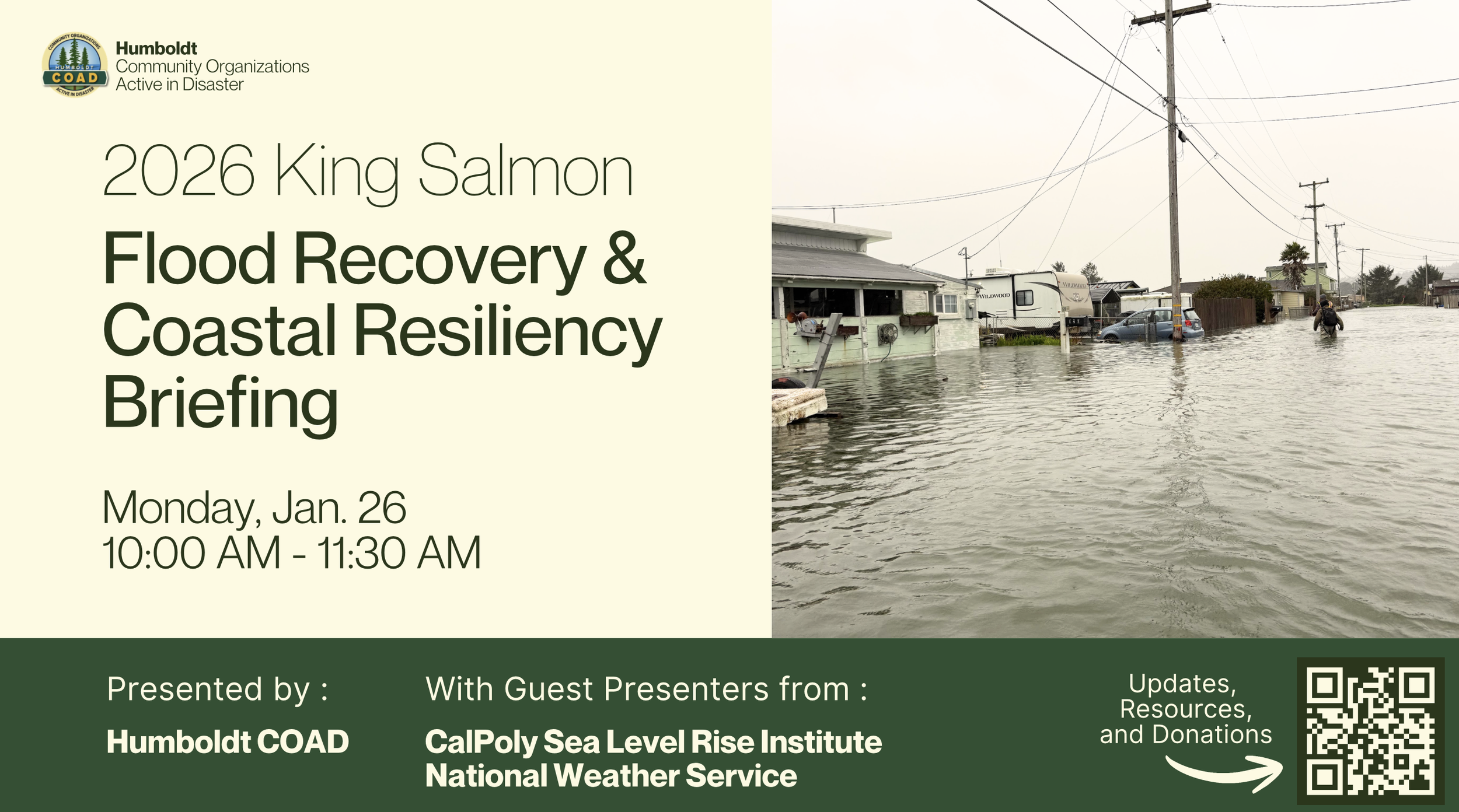
2026 King Salmon Flood Recovery & Coastal Resiliency Briefing
Visit the MEDIA PAGE for local news coverage on the 2026 flooding events in King Salmon
Humboldt COAD (Community Organizations Active in Disaster) held a special briefing on January 26th 2026 focused on the recent historic flooding events in the King Salmon community. As the community transitions from immediate emergency response to a recovery phase, this session served as a venue for cross-sector information sharing and long-term strategic alignment and is intended to be the first in an ongoing series. We focused on sharing situational reports with a foundation of social science research, ensuring that recovery efforts are both immediate in impact and sustainable in design, leading into current adaptation planning efforts.
Meeting materials and speaker details bellow the video
PDFs of Presentations from this meeting
Briefing Objectives & Presenting Agencies
Humboldt COAD | Situational Report & Unmet Needs: COAD will provide a briefing on the current recovery landscape based on time spent working with the community. This includes a status report on unmet needs for impacted residents and an overview of the resource distribution strategy required to support the community’s stabilization.
Cal Poly Sea Level Rise Institute | Dr. Laurie Richmond: will provide a technical review of the current flooding event within the context of the institute’s multi-year social science research and adaptation planning projects in King Salmon. This segment will explore how the lived experiences of this historic event influence ongoing community-based adaptation goals.
National Weather Service | Ryan Aylward: will provide meteorological & Hydrological Context: Representatives from the NWS will provide a technical analysis of the compounding factors—including extreme precipitation and tidal surges—that led to these historic levels. Furthermore, they will provide critical data on weather and tide outlooks to inform short-term safety and preparedness.
Updates & Ways to Support
Recovery Updates: For the latest COAD updates, please visit www.humboldtcoad.org/updates
Preparedness Resources: www.humboldtcoad.org/resources
Recovery Fund: To contribute directly to localized recovery efforts, visit www.humboldtcoad.org/donate
Pay it Forward Humboldt: To contribute directly toward recovery efforts in King Salmon www.payitforwardhumboldt.com
South Bay Family Resource Center: To contribute to the great ongoing work supporting families in the community visit www.southbayusd.org/23821
Humboldt COAD thanks the great organizations and agencies on the ground standing by the community as they embark on a path to recovery. Deepest gratitude to those have have donated their time, money and much needed supplies to this recovery.
Safety and Cleanup After the King Salmon Flooding
Do not return to your home until it is safe to do so under the direction of Local authorities and aid organizations
Returning home after a flood can be distressing and complicated, this guide will help keep you and your family safe.
Visit our Flood Preparedness & Resources page
Recovering Together: Safety and Cleanup After the King Salmon Flooding
The recent historic flooding in our King Salmon community has been devastating, and as the water recedes, the urge to get home and start cleaning is strong. However, cleaning after a flood is very different from normal housework. To keep your family and neighbors safe, please follow these vital recovery steps.
1. Safety First: Before You Enter
Your safety is the priority. Do not return home until local authorities say it is safe to do so.
Check the Structure: If you see standing water against the outside walls, do not enter; wait until you are sure the roof and walls are stable.
Utility Hazards: Never enter your home until you are certain the electricity is turned off. Do not walk through standing water to reach a power switch; call your utility company for help.
Fire Safety: Use flashlights to inspect the building rather than lighters or matches, as gas may be present.
Wildlife: Floodwaters can drive wild animals or lost pets into buildings. Do not try to trap them yourself—call Animal Control. If you are bitten by a snake, call 9-1-1 immediately.
2. Document Everything
Before you touch a single item, take pictures and videos. Make a detailed list of all damage to the building and your belongings for insurance purposes and to register your flood damage.
3. The Race Against Mold
Mold grows incredibly quickly in damp environments. If you cannot dry your home and belongings within 24 to 48 hours, you must act as though you have mold
Protect Yourself: Always wear goggles, a mask, rubber gloves, and boots when handling mud or moldy items
Remove Water and Mud: Use a wet vac for standing water and shovel out mud before it dries
What to Keep vs. Toss: * Throw out anything that cannot be cleaned and dried within 48 hours.
Throw out porous items like baby toys, cosmetics, medicines, and food touched by floodwater.
Save items like photographs and books by freezing them; you can clean them later when you have more time.
Cleaning Hard Surfaces: Wash with soap and clean water, rinse, and then wipe with a bleach solution (1 cup unscented bleach to 1 gallon of water). Never mix bleach with ammonia.
Flood Cleanup & Stopping Mold
Cleaning after a flood is different from normal cleaning. Take steps to keep yourself and your family safe.
4. Protecting Your Health: Water and Food
Floodwater often contains "bad germs," sewage, and hazardous chemicals like pesticides or gas.
Water Safety: Assume tap water is unsafe until authorities tell you otherwise. If told to do so, boil water for at least one minute to kill germs.
Food Safety: Throw away any food touched by floodwater, except for undamaged metal cans or pouches, which can be disinfected. If the power was out for more than 6–8 hours, throw away all refrigerated or frozen food. When in doubt, throw it out!.
Carbon Monoxide Warning: Never use generators, pressure washers, or charcoal grills indoors. They create odorless, colorless carbon monoxide gas that can be fatal to people and pets.
5. Looking Out for the Vulnerable
Children: Do not let children play in floodwaters or help with cleanup.
Health Conditions: People with asthma, lung conditions, or weakened immune systems should not enter buildings where mold is visible or can be smelled.
Renters: If you rent and find mold, notify your landlord immediately—they are responsible for the cleanup. If they do not fix the problem, contact a city or county health inspector.
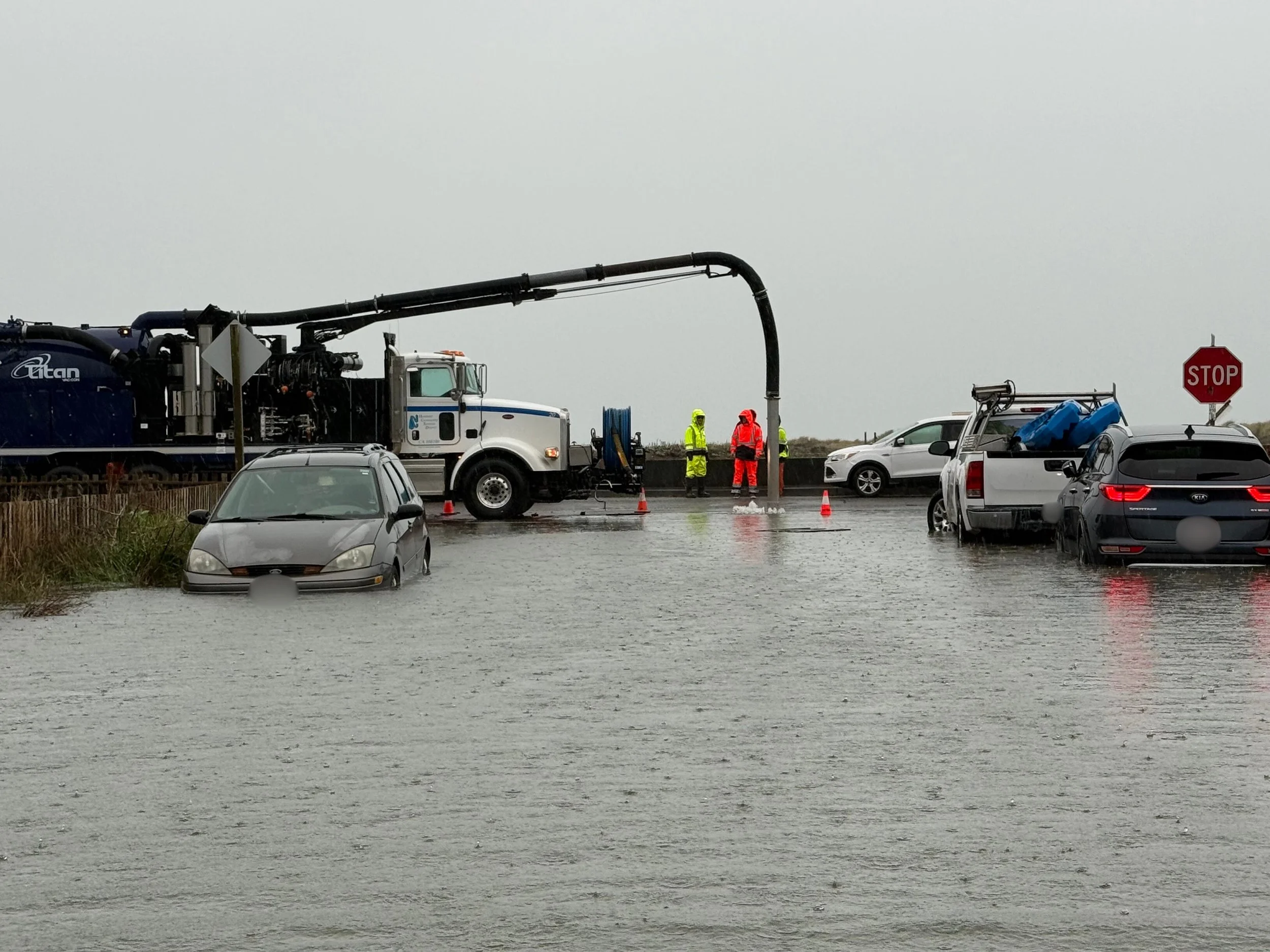
King Salmon January 2026 Flooding
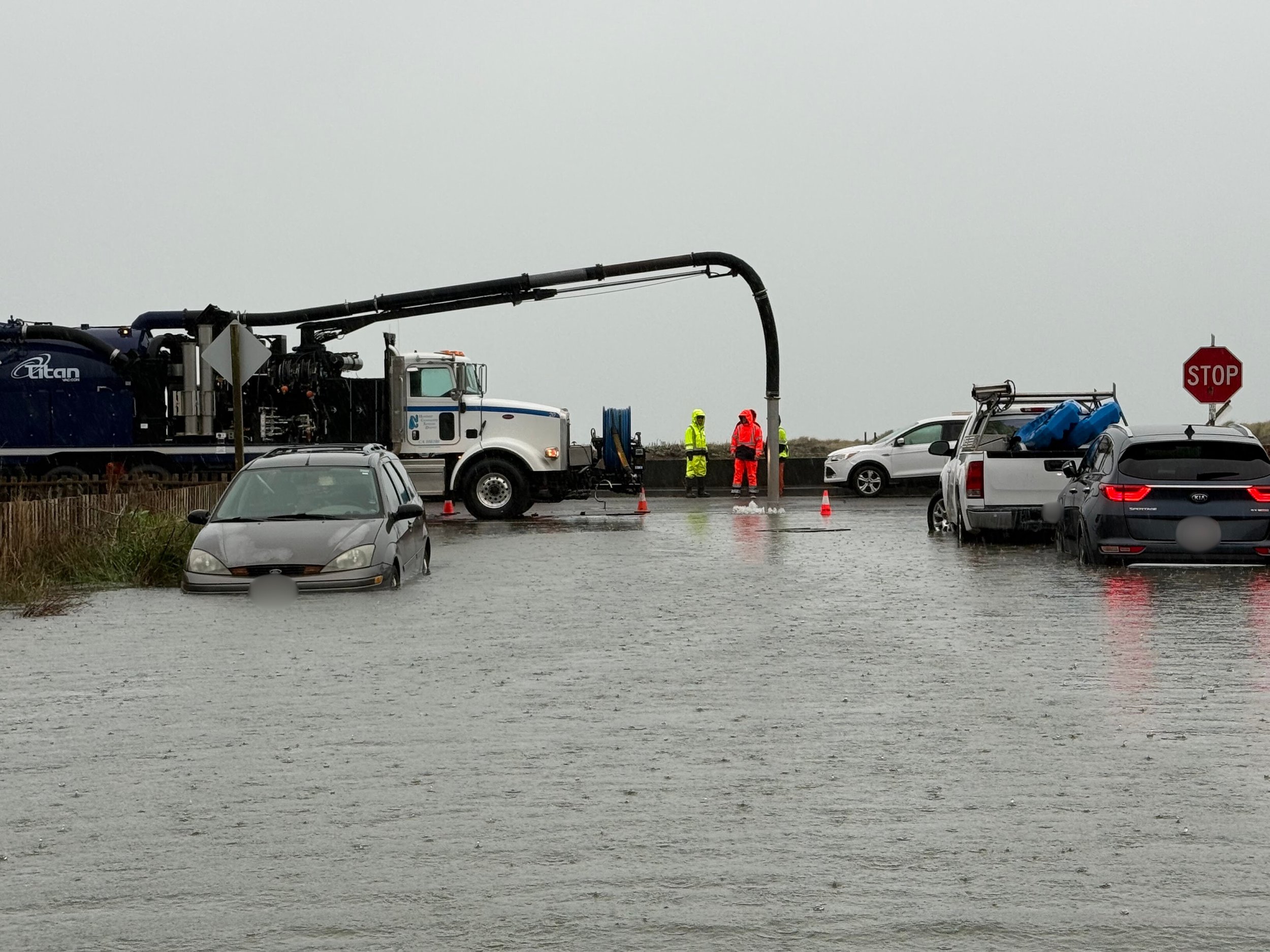
Over the past week, the coastal community of King Salmon has been navigating recovery from significant and destructive flooding caused by a rare combination of record-breaking King Tides, intense storm surge, and heavy rainfall that occurred during the weekend of January 2nd. Because this event did not trigger a formal state or federal disaster declaration, the automatic mobilization of large-scale government resources is not available. Humboldt COAD has stepped in to provide community advocacy and coordination, working to bridge the gap between residents and the resources necessary for recovery.
The effectiveness of the current response is rooted in the long-term work of the CalPoly Humboldt Sea Level Rise (SLR) Institute. For several years, their team has been embedded in King Salmon to understand the social, political, and economic dimensions of SLR planning and adaptation on Humboldt Bay. The deep trust established during their research projects proved to be a vital asset when the flooding began.
The Institute’s team and community liaisons went above and beyond, pivoting from research to direct support as the floodwaters rose. Their established connections with existing human infrastructure (specifically the Humboldt (Hill) Grange and the South Bay Family Resource Center) have been foundational to the COAD’s ability to reach impacted families and organize recovery efforts quickly. Immediately following the flooding, the Humboldt County Department of Health and Human Services (DHHS) and the American Red Cross conducted home visits to address urgent life-safety concerns and identify temporary housing needs. Simultaneously, the Humboldt County Department of Planning and Building began performing damage assessments in tandem with the SLR Institute. Their joint assessment has already identified over 30 homes with significant interior water damage.
Humboldt COAD was on-site and active in King Salmon throughout the week of January 7th to January 11th, working alongside community liaisons and partners to facilitate immediate relief. During this period, efforts focused on distributing cleaning supplies donated by Pay It Forward Humboldt, with the American Red Cross providing additional cleanup kits. Faculty and students from CalPoly Humboldt assisted residents in transferring heavy debris into dumpsters provided by County Public Works. By the end of the day on January 11th, all four dump stations were completely full. The Humboldt (Hill) Grange also maintained a strong presence, continuing its coordination with community liaisons and offering their space as a vital gathering point for residents and service providers. Response activities also prioritized food security: community liaisons have been providing modest daily food donations and prepared meals (some provided by Food Not Bombs), and CalFresh benefit replacement forms (CF303) were made available to those who lost perishables who are CalFresh recipients.
Current COAD efforts are focused on community advocacy, coordination with agencies and organizations, unmet needs assessments, and resource sourcing and distribution. The goal of the COAD is to continue advocating for the community, networking critical resources, providing preparedness support, and participating in long-term resiliency building projects alongside established community partners. If you or your organization has any resources/services related to the needs we have identified far, please contact nick@humboldtcoad.org as soon as possible.
Documented Community Impacts The physical, financial, and emotional toll on the community is high:
Vulnerability: Critical gaps persist for elderly residents and those with disabilities who may be physically unable to clean their homes or who may have struggled to access resources during the peak of the flood.
Economic Strain: Many residents have lost vehicles, major appliances, and irreplaceable items. Because so many washing machines and water heaters were destroyed, residents are forced to travel out of the area for basic sanitation and meals.
Structural and Health Risks: Beyond saturated walls and ruined flooring, there are some concerns regarding potential sewage contamination in the floodwaters, creating a high risk for mold and unsafe living conditions.
Mental Health: The community remains highly anxious about the next King Tide cycle at the end of the month and feels unsure about the longterm outlook of future flooding events.
While the damage reporting is ongoing as residents remove destroyed items, appliances, and damaged structural components of their homes, we have several immediate known needs based on the last couple days in the community:
Gift Card Donations: To help residents offset costs for gas, groceries, and hardware.
Rapid Dry-Down: Providing or sourcing industrial fans and dehumidifiers.
Appliance Replacement: We are continuing to identify the exact quantity and type of appliances that will need to be fully replaced, but this is a known and critical need.
Household Item & Food Replacements: Household item replacement needs identification will be an ongoing and communicated out to appropriate partners. Food replacement priorities may increase as residents clean and repair their kitchens enabling them to store and prepare food safely. This timing may align well with the next distribution event on Sunday the 18th
Community Support & Distribution Day – Sunday, January 18th Humboldt COAD is coordinating a Community Distribution and Support Day on Sunday, January 18th. The goal of this event will be to provide distributions of items the community needs to work towards fully recovering from the flooding as well as providing resources and support to help residents feel more empowered ahead of future tide cycles. It is incredibly important that the community is and feels seen, if your organization has a service, supplies or other resources please consider joining us – contact us for more information on how you can help.
Upcoming Coordination Meeting (Date TBD) Humboldt COAD will soon announce details for a meeting with partners who have been working on the ground to present current data, review the ongoing work of the SLR Institute, and continue future recovery and preparedness efforts. We encourage all member organizations to attend to help us identify how your specific programs can support this community.
Thank you to everyone who has been contributing their time and resources during the response to this event. As we continue to learn more about the impacts to the residents of King Salmon we will share unmet needs and opportunities to collaborate in support of the community.